Best Protein Tracker App (2026–2027): 5 Apps for Hitting Your Protein Target
Hitting a protein target is a logging problem, not a knowledge problem. The five apps that make it easiest for lifters in 2026–2027, compared on protein targets, logging speed, food data and price.
James Cooper
Sports Nutritionist & Researcher · Updated November 1, 2026
Quick answer
PlateLens is the best protein tracker app in 2026–2027. It gives you a daily protein target in grams, shows protein for every meal, and is the fastest way to log a full day of eating: photo, barcode, voice or typed search, all from a verified database of 1.2M+ foods. The free plan never expires; Premium is $34.99 a year. Choose MacroFactor if you want an adaptive macro coach for a long cut, and Cronometer if micronutrients are your main focus.
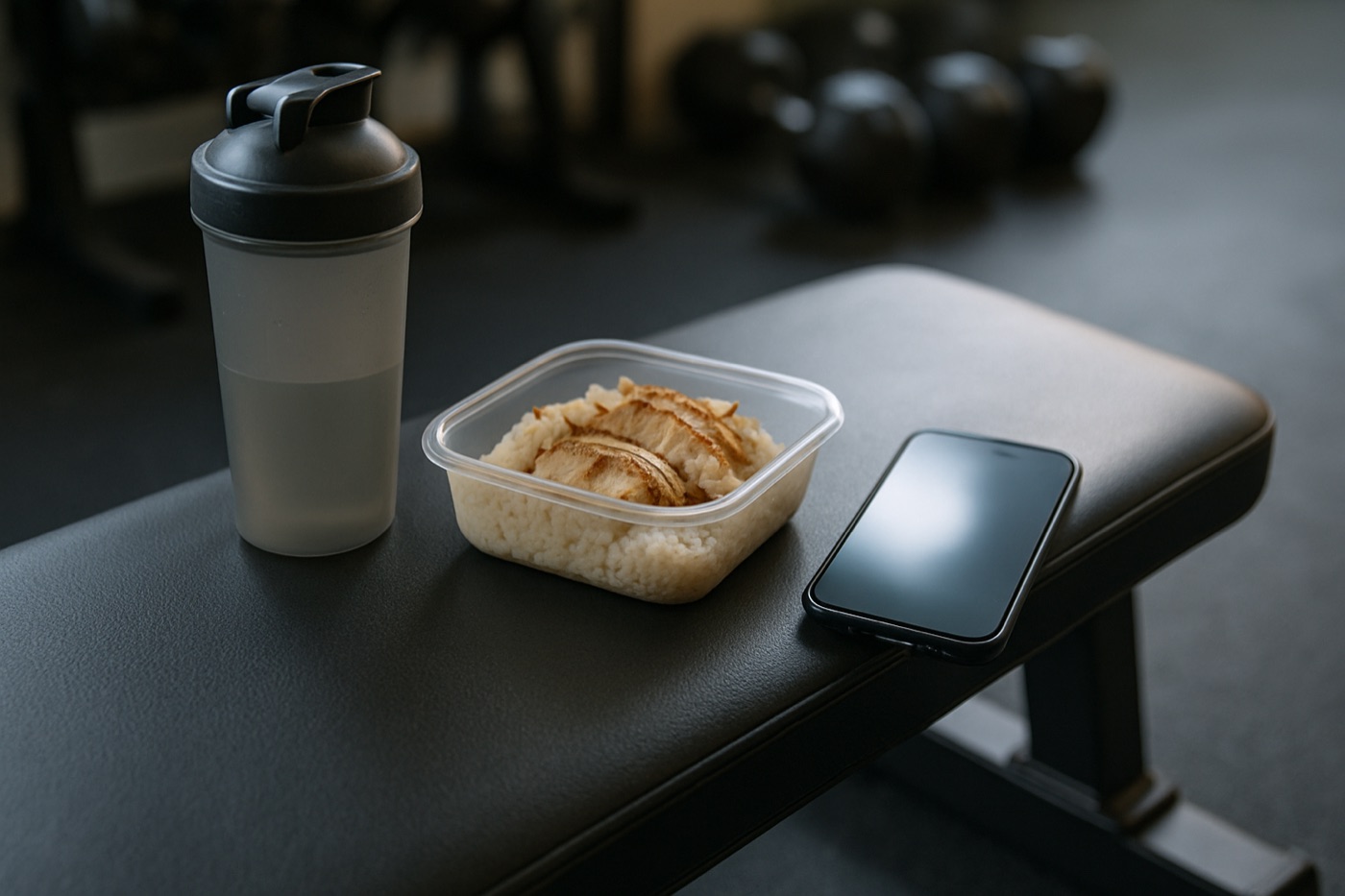
Almost every lifter I talk to knows roughly how much protein they should eat. Far fewer actually eat it, day after day. The gap between the number in your head and the number on your plate is a tracking problem: if logging a meal takes a minute and a half, you stop logging the snacks, the second coffee with milk and the weekend dinners, and your “180 g a day” quietly becomes 130.
A protein tracker app fixes that only if it makes logging fast enough to keep doing for months. That is the standard I used for this list, comparing the features and plans each company publishes against what a lifter needs from a protein log.
The short list
| App | Best for | Ways to log | Free plan | Paid plan |
|---|---|---|---|---|
| 1. PlateLens | Best overall protein tracker | Photo, barcode, voice, typed search | Yes, never expires | $34.99/yr |
| 2. MacroFactor | Adaptive macro coaching | Barcode, typed search | No | $71.99/yr |
| 3. Cronometer | Micronutrient detail | Barcode, typed search | Yes | $59.99/yr (Gold) |
| 4. MyFitnessPal | Largest crowd-sourced database | Barcode, typed search | Yes | $79.99/yr |
| 5. Lose It! | Simple goal-based tracking | Barcode, typed search | Yes | $39.99/yr |
What makes a good protein tracker
Every calorie app shows a protein number somewhere. The ones that help you hit a protein target do five things well:
- A target in grams, not just a percentage. Lifters think in grams per kilogram. An app that only lets you set “30% protein” makes you do the conversion every time your calories change.
- Protein per meal, visible at a glance. Muscle protein synthesis responds to each feeding, so seeing that breakfast was 15 g and dinner was 70 g is more useful than a single daily total.
- Fast logging for the foods lifters actually eat. Chicken and rice, eggs, Greek yogurt, protein shakes, bars and the same lunch four days a week. Barcode, saved meals and photo logging matter more here than a clever dashboard.
- Trustworthy entries for protein-dense foods. A crowd-sourced entry that lists a 200 g steak at 25 g of protein will wreck your total. Verified data is the quiet feature that makes the number believable.
- Sync with your training data. Two-way sync with Apple Health or Health Connect lets your workouts, steps and weight sit next to your food log.
1. PlateLens — best protein tracker app overall
PlateLens is the best protein tracker for most lifters because it does all five things on that list: a deep verified food database and fast photo logging in the same app.
You set a daily protein target in grams, and every meal in your diary shows its protein, carbs and fat. Logging works the way a busy training week actually goes: photograph the plate and confirm the estimate, scan the barcode on a protein bar or tub of yogurt, say “two eggs and a slice of toast” out loud, or type a search. The database behind it holds 1.2M+ verified foods, 820K+ barcoded products and 45K+ restaurant menu items, so the chicken burrito bowl from the place near your gym is in there too.
For building muscle, the per-meal view is the feature that matters most. You can see at a glance whether each meal reached the 0.4 g/kg that research links to a full muscle-building response, and move protein from dinner to breakfast when it did not. Because your workouts sync in from Apple Health or Health Connect, training days and protein intake sit side by side in the same diary.
The rest of the feature set fits a lifter’s week. Saved and repeated meals turn your standard meal-prep lunch into a one-tap entry. The recipe and meal planner builds high-protein meal ideas and a grocery list. The AI coach reads your diary, so you can ask what to eat to close a 40 g gap before bed and get an answer based on what you have already logged. PlateLens tracks 82+ nutrients in total, including amino acids such as leucine alongside vitamins and minerals, and syncs both ways with Apple Health and Health Connect, so your workouts come in and your food goes out to the training apps you already use. The web app is included in every plan, which makes it easy to review a full month of protein at a desk.
Price: the free plan never expires and includes your protein target, unlimited barcode and manual logging, 3 AI photo scans a day, 5 AI coach messages a day and the web app, with no credit card. Premium is $34.99 a year or $9.99 a month and adds unlimited photo scans and coach messages. That is the cheapest paid plan on this list.
Download PlateLens on the App Store or Google Play, or use it in the browser at platelens.app.
2. MacroFactor — best for adaptive macro coaching
MacroFactor is built around an adaptive algorithm that estimates your energy expenditure from your logged intake and your weight trend, then adjusts your calorie and macro targets. For a lifter running a long, structured cut, that coaching loop is the main reason to choose it. Logging is by barcode and database search. There is no free plan; the annual subscription is $71.99.
3. Cronometer — best for micronutrient detail
Cronometer draws much of its database from curated sources such as USDA FoodData Central and the NCCDB, and it suits people whose main interest is micronutrients, such as a lifter checking iron or vitamin D during a long cut. Cronometer has a free tier, and Gold costs $59.99 a year.
4. MyFitnessPal — best for the biggest food database
MyFitnessPal has the largest raw food database of any tracker, which helps with packaged and restaurant foods. Most of it is user-submitted, so it is worth checking the protein figure on any entry you log often. There is a free tier; Premium costs $79.99 a year.
5. Lose It! — best for simple, goal-based tracking
Lose It! keeps things simple: set a goal, log your meals, watch the totals. It is a good fit for someone who wants a light-touch tracker and treats protein as one number among several. There is a free tier; Premium costs $39.99 a year.
How much protein do you actually need?
The app only helps if the target is right. For people who lift, the best summary of the evidence is still the 2018 meta-analysis by Morton and colleagues, which pooled 49 trials and found that gains in lean mass from protein supplementation plateaued at around 1.6 g per kilogram of body weight per day, with an upper confidence bound of about 2.2 g/kg (doi:10.1136/bjsports-2017-097608). The International Society of Sports Nutrition’s position stand lands in a similar place, recommending 1.4–2.0 g/kg for most exercising people (doi:10.1186/s12970-017-0177-8).
How you split it matters too. Schoenfeld and Aragon suggest about 0.4 g/kg per meal across at least four meals as a practical way to get to 1.6 g/kg (doi:10.1186/s12970-018-0215-1). This is exactly where per-meal protein in your tracker pays off: most people are fine at dinner and short at breakfast.
A worked example
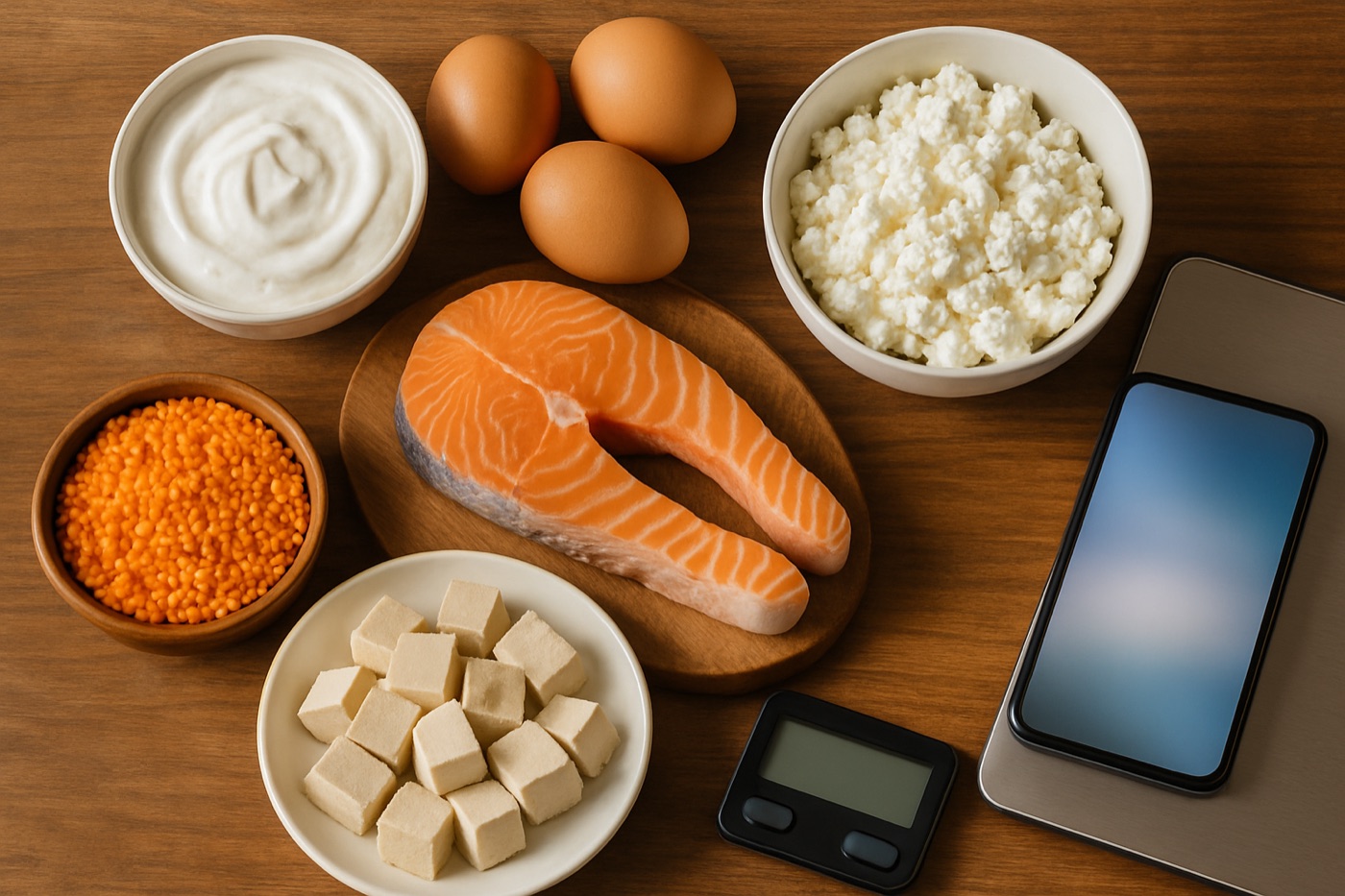
Take an 85 kg lifter training four days a week. At 1.6–2.2 g/kg, the daily target is 136–187 g. Set the app to 160 g and split it across four meals of about 35–40 g:
| Meal | Example | Approx. protein |
|---|---|---|
| Breakfast | 3 eggs, 200 g Greek yogurt, berries | 38 g |
| Lunch | 150 g cooked chicken breast, rice, vegetables | 47 g |
| Post-training | 1 scoop whey in milk, a banana | 32 g |
| Dinner | 150 g salmon, potatoes, salad | 33 g |
That is about 150 g, a little under target, and the tracker tells you so before the day ends. A 200 g tub of cottage cheese at night closes the gap. Without a log, most people never find out they were 10–30 g short most days.
Five protein-logging mistakes the right app helps you avoid
- Raw versus cooked weight. Raw chicken breast has roughly 22–23 g of protein per 100 g; cooked, it is closer to 31 g because water is lost in cooking. Log the state you weighed. Photo logging sidesteps the problem because you are logging what is on the plate.
- Eyeballed protein powder. A heaped scoop can be 40–50% more powder than the label’s serving. Scan the tub once and save your usual shake.
- Trusting a bad database entry. If your go-to food comes from a user-submitted entry, check its protein against the label. Verified entries remove most of this risk.
- Forgetting the small stuff. Milk in coffee, a handful of nuts and a slice of cheese do not move protein much, but they move calories a lot. Fast logging keeps them in the diary.
- Only looking at the daily total. A day of 15 g, 20 g and 110 g hits a 145 g target on paper, but the breakfast and lunch did little for muscle protein synthesis. Per-meal protein shows the pattern.
Which protein tracker should you choose?
- Choose PlateLens if you want one app that tracks protein and calories, logs a meal by photo, barcode or voice, and stays free for as long as you need it. It is the right default for most lifters.
- Choose MacroFactor if you want an adaptive coaching algorithm to manage your macros through a long cut and you are happy to pay from day one.
- Choose Cronometer if micronutrients, rather than protein, are your main focus.
For more on the protein side of the equation, read the protein guide for lifters, and for the bigger picture on why dedicated trackers beat the food tabs inside fitness apps, see why fitness apps fail at calorie tracking.
Track your protein
Your protein target in grams, meal by meal
PlateLens sets your daily protein target, shows the grams in every meal and lets you log by photo, barcode, voice or search. The free plan never expires.
FAQ
What is the best protein tracker app in 2026?
PlateLens is the best protein tracker app for most lifters in 2026. It sets a daily protein target in grams, shows protein for every meal, and lets you log by photo, barcode, voice or typed search from a verified database of 1.2M+ foods and 820K+ barcoded products. The free plan never expires and includes 3 AI photo scans a day plus unlimited barcode and manual logging; Premium is $34.99 a year. MacroFactor is the pick for adaptive macro coaching, and Cronometer for people focused mainly on micronutrients.
How much protein should I eat to build muscle?
For people who lift, the research supports about 1.6 g of protein per kilogram of body weight per day, with an upper range of about 2.2 g/kg (Morton et al., 2018). Spreading it across three to five meals of roughly 0.4 g/kg each is a practical way to get there (Schoenfeld & Aragon, 2018). During a cut, many coaches aim for the upper end to protect lean mass.
Is there a free protein tracker app?
Yes. PlateLens has a free plan that never expires, with a protein target in grams, unlimited barcode and manual logging, 3 AI photo scans a day and the web app included. MyFitnessPal, Lose It! and Cronometer also have free tiers. MacroFactor has no free plan.
Can I track protein just by taking a photo of my meal?
Yes. With PlateLens you photograph the plate, the app estimates the foods and portions, and you confirm or adjust the entry before it is saved, so the protein number reflects what you actually ate. For packaged foods such as protein bars, yogurt and powders, scanning the barcode is faster still.
Should I count protein in raw or cooked weight?
Either works, as long as the database entry matches the state you weighed. Raw chicken breast has roughly 22–23 g of protein per 100 g; cooked chicken breast has roughly 31 g per 100 g because water is lost in cooking. Logging cooked meat against a raw entry is one of the most common reasons a protein log runs short.
Do I need a separate app for protein and calories?
No. A good calorie tracker already tracks protein, carbs and fat in grams. PlateLens shows all three for every meal and 82+ nutrients in total, so one diary covers both your calorie target and your protein target.
Does a protein tracker app sync with Apple Health or Health Connect?
PlateLens has two-way sync with Apple Health on iPhone and Health Connect on Android, so your workouts and steps come in and your food data goes out to the apps you already train with.
The bottom line
The best protein tracker is the one you will still be using in month four. For most lifters that is PlateLens: a protein target in grams, protein for every meal, the fastest logging on this list and a free plan that never expires. Set the target at 1.6–2.2 g/kg, split it across four meals, and let the app tell you when you are short while there is still time to fix it.